winston-salem african american archives
_edited.jpg)



devoted to research & culture
The Winston-Salem African American Archives is devoted to research, education, and exhibition of materials that document Winston-Salem and Forsyth County’s African American history and culture. The Archives' named collections document individuals and businesses significant to Winston-Salem’s intellectual and cultural achievements. The Archives’ named collections document the history of Katie B. Hospital and its legacy of care, Winston-Salem professionals, and businesses that provided invaluable services to residents, such as the Safe Bus Company.
Collecting Areas
With its vast collection of photographs, periodicals, manuscripts, historical artifacts, and other materials related to the educational, business, and cultural life of Winston-Salem and Forsyth County, the Archives is an invaluable resource to writers, scholars, students, and creators.
Collection materials include artifacts, newspaper clippings, photographs, and printed materials documenting Winston-Salem’s African American businesses, such as transportation, restaurants, grocery stores, pool halls, funeral homes, barbershops, and beauty salons located in the first African American business district. The heart of this district was the areas of Chestnut Street, East Seventh Street, Patterson (Depot Street) Avenue, and South Liberty Street; Church and Third Streets; and Fourth and Fifth Streets east of Main Street.
Educational materials document the rich history and contributions of Winston-Salem’s first educators, administrators, and students from schools such as the Depot Street School and Winston-Salem’s Big 4 segregated schools (Atkins, Carver, Anderson, and Paisley). Materials include artifacts, newspaper clippings, yearbooks, vertical files, photographs, and printed materials.
Collection materials include artifacts, newspaper clippings, photographs, and printed materials documenting Winston-Salem’s African American entertainers, establishments, and theaters.
The photograph collection contains original, rare, and unique visual source materials documenting business, education, entertainment, churches, military, medical history, neighborhoods, and social life. The photographic collection contains original loose and framed photographs and both physical and digitized materials (see Digital Collections).
Collection materials document Winston-Salem’s vibrant cultural life as early as the 1940s. Vertical files are a significant resource for printed materials on clubs, fraternities, sororities, lodges, recreational facilities, civic, and philanthropic organizations.
Materials also include laminated newspaper pages (some as early as the 1920s), photographs, and printed materials documenting notable moments in Winston-Salem’s community activism history, such as the R.J. Reynolds Local No. 22 Union strike in 1947 and Winston-Salem’s first lunch counter sit-in victory.
The sports collecting area preserves the history of local organized athletics, including Winston-Salem’s Pond Giants, the nation’s oldest semi-professional baseball team, high school intramurals, sportsmen's clubs, and the City of Winston-Salem recreational activities. Materials include artifacts, newspaper clippings, photographs, and printed materials featuring community achievements in basketball, baseball, football, track, and tennis.
The Winston-Salem African American Archive contains secondary sources chronicling the written and pictorial history of Winston-Salem/Forsyth County. This research material, along with additional published works housed in the Archives, serves as an introductory resource to our holdings.
African American Firsts of Winston-Salem/Forsyth County: Pioneers Who Greatly Impacted The City, This County, The Nation, And The World
Author: Chenita B. Johnson
African Americans in Winston-Salem/Forsyth County Pictorial History
Authors: Lenwood G. Davis, William J. Rice, and James H. McLaughlin
William Samuel Scales: African American Businessman in a Segregated Town
Author: Linda Scales Dark
Winston-Salem’s African American Legacy
Author: Cheryl Streeter Harry
Dr. Frank and Lillian Lewis
John Frank Lewis (1901-1983) was an educator and psychology professor. Dr. John Lewis received a degree from Huston-Tillotson University and was chair of Winston-Salem Teachers College’s Education and Psychology Department.
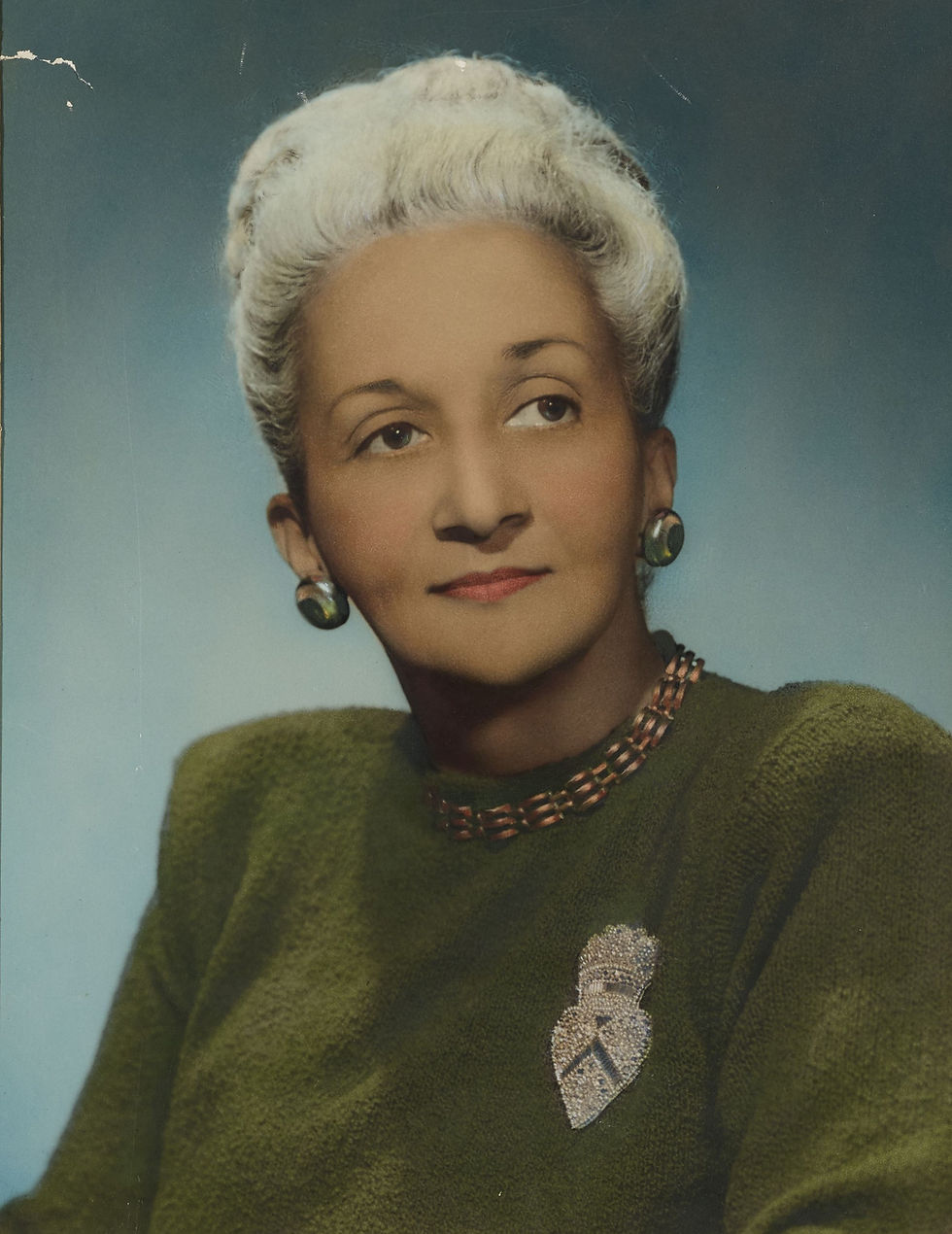
Lillian Leonora Burwell (1904–1987) was an American zoologist and a professor of biology at Winston-Salem State for 23 years. Dr. Lillian Lewis is credited as the first African American woman to receive a doctorate degree from the University of Chicago and the first African American elected to the Forsyth County School Board in 1960. In the fall of 1988, the John F. and Lillian B. Lewis Microelectronics Center began operations in the Anderson Center on the campus of Winston-Salem State University.
This collection contains photos, printed materials, and correspondence documenting the professional and social club life of Dr. Frank and Lillian Lewis. This collection also contains artifacts from their world travels.



George H. Black
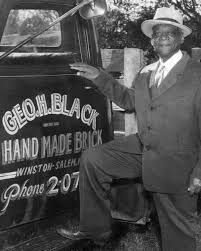
George H. Black (1879-1980) was a nationally and internationally recognized master brickmaker. Born to formerly enslaved parents, George Black came from Randolph County to Winston-Salem as a child. He later worked at the Hedgecock and Hime brickyard. In 1897, he married Martha Jane Hampton, and eight children were born to their union. In 1910, he established his own brickyard and honed his handmade “soft mud” technique, which he would teach to others well into his 90s as far away as Guyana.
As the original mason of the 1923 North Carolina Baptist Hospital’s main building, George Black’s legacy remains evident throughout the city of Winston-Salem through his handmade bricks seen in homes, churches, businesses, and restoration projects such as Old Salem, Colonial Williamsburg, Charleston, and Savannah. This collection contains artifacts and framed photographs. Additional related materials can be found in the newspaper collection.


.jpg)
Joe Bradshaw
Joe Bradshaw (1914-1988) was a graduate of Lincoln University. Mr. Bradshaw attended Winston-Salem State University and Atlanta University. He obtained degrees in sociology and social work, as well as teacher certification. During the 1980s, Mr. Bradshaw was one of several founders of the Society for the Study of Afro-American History (SSAH) in Winston-Salem, Forsyth County, and became a significant collector of many historical documents.
This collection contains artifacts, photos, and correspondence materials collected by Mr. Bradshaw relating to the Society for the Study of Afro-American History (SSAH).
_edited.jpg)

Katie B. Hospital
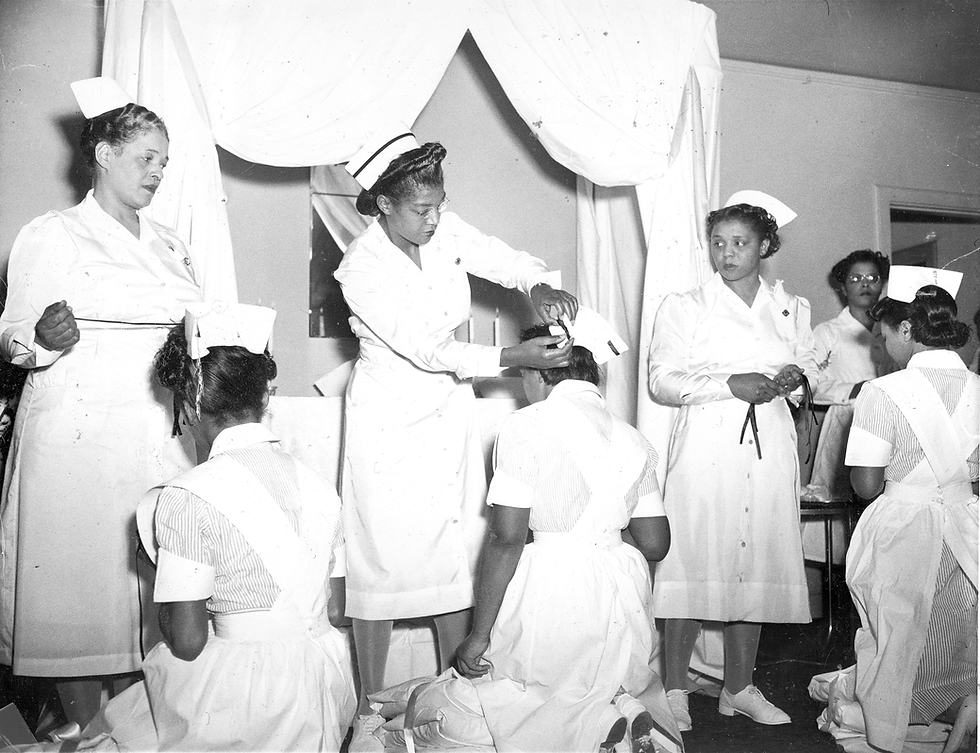
On August 10th, 1938, the Kate Bitting Reynolds Memorial Hospital opened on the east side of Winston-Salem. “Katie B," as it was affectionately known, served the Winston-Salem African American community with medical care and high-quality medical education for 32 years.
A facility was also constructed to house and provide professional nursing training. Donations from Mr. and Mrs. William Neal Reynolds and the Duke Foundation were the primary sources of funding. This collection contains black-and-white photographs of nurses, physicians, auxiliary staff, and labs.


Mary McGhee Hairston
Mrs. Mary Laura McGhee Hairston (1895-1995) was the daughter of Reverend C. E. McGhee and Laura DeHaven McGhee of West Virginia. She was married to Dr. Rufus Hairston, Winston-Salem’s first Black pharmacist. Mrs. Hairston received degrees from West Virginia State College in 1913 and from Winston-Salem Teachers College, now known as Winston-Salem State University.
Mrs. Hairston, along with Mrs. Maude Ray, was instrumental in starting the George Moses Horton Branch Library in 1927. Mrs. Mary Hairsotn was appointed librarian. Mrs. Mary Hairston retired as a librarian from Winston-Salem State University. The Gleason-Hairston Terrace dormitory is named in Mr. and Mrs. Hairston's honor.
This collection contains photos, a report related to the Carnegie Library, postcards, greeting cards, and birthday cards.
Safe Bus
The Safe Bus Company was established in 1926 in Winston-Salem, N.C., and operated until 1972. It became the largest Black-owned transportation company in the United States and provided reliable transportation to African American residents during the Jim Crow era.
The company began with 13 Black jitney drivers and expanded to over 75 buses serving more than 8,000 residents. In 1972, the City of Winston-Salem purchased Safe Bus’s assets and retained its staff, forming the Winston-Salem Transit Authority (WSTA).
This collection contains a select number of operational photos and photos documenting the transportation center's renaming. Related materials are located at the WSTA administration offices.


Winston Mutual Life Insurance
On August 6, 1906, Dr. J. W. Jones and local Winston-Salem African American business and social leaders established the Winston Industrial Association, a health and accident insurance company, with attorney John S. Fitts as its first president. In 1915, Mountain City Mutual Insurance Company of Asheville and Winston Industrial Association merged to reduce expenses and increase value for policyholders, and the company was renamed Winston Mutual Insurance Company.
In 1969, the company built a new home-office building in Winston-Salem. The five-story building also housed several small businesses, doctors’ offices, a radio station, and a pharmacy.
This collection contains records from the Greenville and Rocky Mount offices, including photographs of agents and secretaries; business meetings (board of directors and officers); dinner meetings; and company operations involving staff and agents. The collection also includes meeting minutes and print shop materials.

.jpg)
Winston-Salem Chronicle
The Winston-Salem Chronicle is an award-winning African American newspaper that covers Black community news. Ernest Pitt started the Winston-Salem Chronicle after he was unable to publish an article as a senior at UNC Chapel Hill in 1974. Ernest Pitt’s service to the community extended beyond the newspaper.
He served on the board of the Winston-Salem Chamber of Commerce and became chair of the Winston-Salem Housing Authority. In 2017, Mr. Pitt sold the Chronicle to The Chronicle Media Group, LLC.
This collection contains awards received by the Chronicle and bound newspaper article books printed by the Chronicle, arranged in chronological order (circa 1970s-1990s).


Resource
nc Digital Collections
Search thousands of digitized items about the history and culture of Winston-Salem and Forsyth County, including 1,042 yearbooks, slides, and photographs.
In addition, the Winston-Salem African American Archive documents the legacy of care and military history in and around Winston-Salem N.C.


Research Room Policies
Visitors to the Archives should bring one standard form of identification (such as a driver's license). With proper identification, all researchers will be required to register for research. Research applications will remain on file for one year.
Access to the archival collections shall only be by presentation of current photo identification and providing an accurate name and address.
Briefcases, bags, coats, or other bulky clothing and notebooks shall not be taken into the research facilities. Researchers will be provided with a secure space to house personal items outside the research area.
Smoking, eating, or drinking shall not be permitted in the research facilities.
A researcher may request more than one box or volume of records. However, a researcher may access only one box of loose records or up to three volumes of records at any one time. When use of the box or volumes is completed, the researcher shall return the records prior to obtaining another box or other volumes of records.
A researcher wishing to temporarily leave the research facility must turn in all pulled archival records and check in with W-S AAA staff upon reentering.
Orders for copies placed in person by a researcher shall not exceed 50 copies per researcher per day. Fees for such orders shall be paid at the time the copies are made and may not be billed.
Researchers shall exercise care & observe the following:
Manuscripts shall not be marked or otherwise altered or defaced.
Pens, highlighters, and other writing instruments that create permanent marks shall not be permitted in research facilities.
Tape and other office supplies, such as correction fluid and gum erasers, shall not be permitted in the research facilities. Pencils shall be used with great care to ensure no marks or other damage are made to the materials.
All collection materials shall be placed flat on the tables; they shall not be held in the lap or propped against the edge of a table.
Only one folder of loose papers from a box of loose papers shall be opened at one time in order to avoid mixing of records or folders.
Papers shall not be rearranged under any circumstances. If a researcher thinks something is out of order, a W-SAAA member should be notified.